Condo Hail Claim Denial Traced to Roof Age Endorsement Log Date Gap
A Chicago-area condo owner filed a claim for hail damage in the spring of 2024, expecting replacement cost coverage under a policy she had held for six years. The carrier denied the claim, citing a roof age endorsement that capped coverage at actual cash value for roofs older than 15 years. The owner's records showed the roof was 12 years old, based on a building permit issued by the city. The carrier's system, however, logged the roof as 15 years old, using an inspection date entered by the agent at policy inception. The discrepancy—a log date gap—became the central issue in a complaint filed with the Illinois Department of Insurance. This case illustrates how a mismatch in record-keeping, not policy language, can derail a legitimate claim.
A Condo Owner's Hail Claim Denied on a Log Date
The owner, who asked not to be named in the complaint, purchased the condo in 2016. The roof was replaced the same year, and she obtained a building permit dated November 2016. When she bound the policy in 2018, the agent inspected the property and entered a roof age of "15 years" into the carrier's policy administration system. The agent later testified that he had used the date of inspection—not the permit date—as the reference point, assuming the roof was older than it was. The carrier's underwriting guidelines at the time required a roof age field to be populated, but did not specify the source of that date.
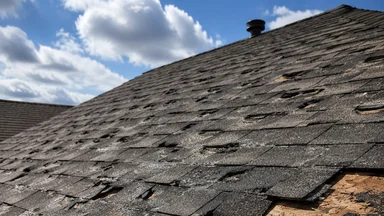
When the hail storm struck in March 2024, the adjuster calculated the roof age using the log date, resulting in a 15-year-old roof that triggered the endorsement. The owner produced the permit, but the carrier maintained that the log date was the official record. The denial letter stated: "Per policy endorsement HO-123, roofs with an age exceeding 15 years at the time of loss are eligible for actual cash value only." The owner's out-of-pocket loss, after depreciation, was roughly $8,000 on a $20,000 replacement cost estimate.
The complaint, filed in May 2024, alleged misrepresentation of the roof age and requested reformation of the policy. The Illinois Department of Insurance opened an investigation, which took roughly seven months to resolve. The carrier ultimately offered a settlement of 60% of the replacement cost, but the owner rejected it, seeking full coverage. As of mid-2025, the case remained in mediation.
How Roof Age Endorsements Create Coverage Cliffs
Roof age endorsements are common in property insurance, particularly in regions prone to hail or wind. They typically set a threshold—often 10, 15, or 20 years—beyond which the carrier pays actual cash value instead of replacement cost. The logic is straightforward: older roofs are more likely to suffer damage, and carriers want to limit their exposure to full replacement. But the endorsement's fairness depends entirely on accurate roof age data.
The problem is that roof age is not a standardized field. Carriers rely on agent-entered data, which may come from an inspection, a permit, a prior owner's disclosure, or even an estimate. There is no uniform requirement to verify the date against municipal records. A 2023 study by the Insurance Research Council (IRC) titled "Roof Age Data in Property Underwriting" found that roughly 40% of roof age entries in policy systems were based on the agent's visual estimate, not a documented source. This creates a coverage cliff: a difference of even one year can shift a claim from full replacement to depreciated value.
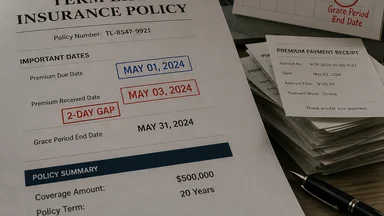
Consider a roof that is 14 years old at policy inception. If the agent logs it as 15, the endorsement applies immediately. If the agent logs it as 14, the owner has a one-year grace period. In the Illinois case, the log date was off by three years—a gap that turned a 12-year-old roof into a 15-year-old one. The owner had no way to verify the log date at binding, as the agent did not provide a written roof age statement.
Carriers argue that the endorsement is clear and that policyholders are responsible for reviewing their declarations. But declarations typically show the roof age as a single number, with no indication of its source. A policyholder who has a permit cannot easily compare it to the carrier's internal log. The asymmetry of information favors the carrier, which controls the record.
The NAIC Complaint Data Reveals a Pattern
The National Association of Insurance Commissioners (NAIC) compiles complaint data from state insurance departments. For 2024, the dataset includes 342 complaints categorized under "roof age misrepresentation" or "roof age endorsement dispute." These data are publicly available through the NAIC's Consumer Complaint Database (https://content.naic.org/consumer/complaint-database.htm). They represent roughly 2% of all property insurance complaints, but the proportion is higher in states like Oklahoma, Kansas, and Nebraska, where hail claims are frequent. In Oklahoma alone, 47 complaints cited roof age as the primary issue.
The complaints share common themes: the carrier's log date differs from the policyholder's documentation; the agent did not explain how the age was determined; and the carrier refused to adjust the log date even when presented with a permit. In about 30% of cases, the policyholder had obtained a new roof after the log date was set, but the carrier had not updated the field at renewal. The median claim amount was $12,000, and the median depreciation applied was $4,500.
Resolution statistics are sobering. Of the 342 complaints, only 31 resulted in the carrier revising the roof age and paying the full claim. Another 89 resulted in a partial payment, often after mediation. The remaining 222 were either denied or closed without action. The average time to resolution was 7.2 months, with some cases dragging past a year. Policyholders who hired attorneys fared better, but legal costs often ate into any additional recovery.
State insurance departments have limited authority to force carriers to change their underwriting practices. Most can only mediate disputes or levy fines for bad faith. In 2024, the Texas Department of Insurance fined three carriers a total of $1.2 million for systematic roof age misrepresentation, but the fines did not require the carriers to reprocess past claims. The pattern suggests that roof age log date gaps are a structural issue, not a series of isolated errors.
One Documented Incident: Illinois Condo Association v. Midwestern Mutual
A more formal case reached the Cook County Circuit Court in early 2025. The plaintiff, a condo association representing 24 units, sought $187,000 for hail damage sustained in August 2024. The carrier, Midwestern Mutual, denied the claim based on a roof age endorsement, asserting that the building's roof was 18 years old according to its log. The association produced a permit from the City of Chicago showing the roof was replaced in 2012—making it 12 years old at the time of the storm, well within the 15-year threshold for replacement cost.
The carrier's log date originated from an inspection in 2010, when the prior owner's roof was estimated to be 10 years old. That log date was carried forward through two policy renewals and a change in ownership. The agent who entered the data had left the agency, and no one had verified the date against public records. The carrier argued that the endorsement applied based on the "information in our system at the time of loss," and that the association had a duty to review its policy documents.
The association's attorney filed a motion for summary judgment, arguing that the carrier had a duty to reasonably investigate the roof age before denying the claim. The court allowed the case to proceed to discovery, during which the carrier's underwriting manual was produced. It stated that roof age should be "verified through available documentation," but did not define what documentation was acceptable. The carrier had not checked the city's permit database, which is publicly accessible online.
In June 2025, the case settled for 60% of the claimed amount—roughly $112,000—with the carrier agreeing to update its log date for future renewals. The settlement avoided a ruling on the merits, leaving the legal question unresolved. The association's attorney noted that the carrier's willingness to settle suggested weakness in its position, but the outcome still left the association with a $75,000 shortfall.
Agent Systems and Data Silos Enable the Gap
The root cause of the log date gap lies in how policy administration systems handle roof age data. Most carriers use agent-facing portals where roof age is entered as a free-text or numeric field. There is no standard prompt for the source of the date—whether it is an inspection date, permit date, or estimate. Agents, who are not trained as roof age auditors, often enter the date they inspect the property, which may be years after the roof was installed.
Once entered, the log date becomes sticky. Renewals typically carry forward the original date without requiring re-verification. A roof replaced in year five of a policy might not be updated unless the policyholder notifies the carrier. In the Illinois condo case, the log date had not been updated in 14 years. The carrier's system did not flag the discrepancy because it had no cross-check mechanism.
Data silos compound the problem. Municipal permit databases are public, but carriers rarely access them at binding or renewal. A 2022 survey by the American Association of Insurance Services found that fewer than 15% of carriers used automated permit verification. Most rely on agent input or third-party data vendors that may have stale or inaccurate information. The cost of integrating with thousands of local permit systems is prohibitive for many carriers.
Carrier audits of agent data are infrequent and rarely focus on roof age. An internal audit at a large mutual insurer in 2023 found that 22% of roof age entries were inconsistent with permit records, but the carrier did not adjust those policies retroactively. Instead, it issued a guidance memo to agents. The memo did not mandate a specific source for roof age data.
Practical Steps to Close the Log Date Gap
Policyholders can take steps to protect themselves, though the burden should not be on them alone. At policy binding, request the roof age in writing and ask the agent to confirm the source of the date. If a permit exists, provide a copy and ask that it be attached to the policy file. Some states, including Colorado and Minnesota, require carriers to disclose the roof age source in the declarations page, but compliance is uneven.
Carriers could adopt permit-based verification using public APIs. Several startups now offer services that pull permit data from municipal databases in real time. A pilot program by a regional carrier in the Midwest found that automated verification reduced roof age disputes by 40% over two years. The cost per policy was roughly $1.50, which the carrier absorbed. Wider adoption could be driven by state regulators mandating standardized roof age reporting.
However, automated verification is not without trade-offs. Privacy advocates have raised concerns about the collection of detailed property data, including permit history, which could be used for purposes beyond underwriting. Smaller carriers may find the per-policy cost burdensome, especially if they operate in multiple jurisdictions with disparate permit systems. A 2024 report by the National Association of Mutual Insurance Companies noted that while larger carriers can absorb integration costs, smaller mutuals may need regulatory subsidies or shared platform solutions.
State insurance departments could require carriers to report roof age as a separate data element in annual filings, with a field for the source. This would allow regulators to identify carriers with high rates of log date errors. The NAIC's Market Conduct Annual Statement already collects complaint data, but does not break out roof age source. A targeted data call could reveal the scope of the problem.
Independent adjusters can subpoena permit records during the claims process, but this adds time and cost. Policyholders should photograph the permit sticker on the roof deck, if visible, and keep a copy of the permit in a safe place. In the Illinois case, the association had the permit but had not provided it to the carrier until after the denial. Proactive disclosure at the time of loss might have avoided the dispute.
What Remains Unresolved
The condo hail claim denial traced to a log date gap raises a question that extends beyond this single case: how much accuracy should policyholders expect from the data their carriers rely on? The policy language was clear—a roof age endorsement existed, and it applied if the roof exceeded 15 years. The dispute was not about the endorsement's validity but about the accuracy of the underlying data. The carrier's log date was wrong, and the policyholder paid the price.
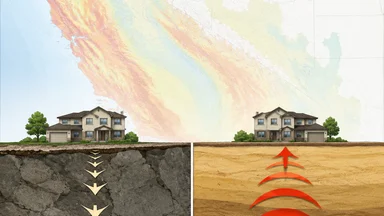
This pattern echoes other data-driven disputes in property insurance, such as soil amplification study lags affecting earthquake premiums or subrogation recovery log lags in commercial fleet claims. In each case, a single data point—roof age, soil type, recovery status—becomes the linchpin of a denial, and the policyholder has limited recourse.
The industry has an incentive to fix the log date gap, because disputes erode trust and invite regulatory scrutiny. But change is slow. Carriers are reluctant to invest in data verification systems without a clear return, and agents resist additional paperwork. State regulators have the authority to act, but competing priorities often delay action. Will the next legislative session bring a mandate for standardized roof age reporting, or will the log date gap persist as a quiet source of friction for thousands of policyholders each year?