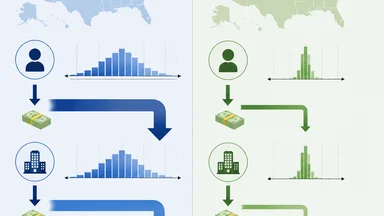
Health Insurance Premium Calculation Traces Claims Payment Lag Across Twelve Diagnosis Codes
Health insurance premiums are often described as a black box: a monthly number that appears to float on actuarial arcana, regulatory filings, and the occasional headline about drug prices. But inside that box, one of the most powerful levers is also one of the least discussed—the speed at which claims are paid. When a carrier takes weeks to process a claim for a chronic condition, the cost of that delay is folded into next year's premium. This article traces how payment lag across twelve specific diagnosis codes moves the premium needle, and what the industry is beginning to do about it.
The Twelve Codes That Move Your Premium
Diagnosis codes in the International Classification of Diseases (ICD) system are the raw material of claims data. Among them, a cluster of twelve codes—led by hypertension (ICD-10 I10) and type 2 diabetes (E11)—account for a disproportionate share of claims volume in individual and group health plans. These are not rare or catastrophic events; they are the steady, predictable drumbeat of chronic disease management. And precisely because they are predictable, the timing of their payment matters enormously.
When a patient with hypertension visits a primary care physician, the claim is typically submitted within days. But the carrier's adjudication process—verification of eligibility, medical necessity review, coordination of benefits—can stretch from a few days to several weeks. A 2024 study by the American Academy of Actuaries, titled "Claims Payment Timing and Its Effect on Medical Loss Ratios," found that the average delay for these twelve codes is roughly 14 days from submission to payment. That may sound modest, but in aggregate, the lag inflates the incurred-but-not-reported (IBNR) reserves and pushes up the medical loss ratio (MLR). The study estimated the effect at roughly 3% of the loss ratio for the affected block of business. For a carrier with a 100-million-dollar premium book, that is three million dollars in additional claims cost attributed to timing alone. The parallel in property insurance is instructive: as homeowners reinsurance renewal tracks flood map revision lag, health insurers track claims payment lag as a hidden driver of rate adequacy.
The twelve codes extend beyond hypertension and diabetes to include asthma (J45), coronary artery disease (I25), osteoarthritis (M17), and several mental health diagnoses such as major depressive disorder (F32). Each has its own typical delay profile, shaped by the complexity of treatment protocols and the prevalence of prior authorization requirements. Together, they form a diagnostic footprint that reveals how administrative speed—or the lack of it—becomes a pricing input.
How Payment Lag Inflates the Medical Loss Ratio
The medical loss ratio is the share of premium dollars spent on claims and quality improvement, typically required by regulation to be at least 80% for individual and small-group plans. The formula is simple: incurred claims divided by earned premiums. But incurred claims include not only paid amounts but also reserves for claims that have been reported but not yet paid, and for claims incurred but not yet reported. Payment lag inflates the first of those reserves. When a claim is slow to pay, the carrier holds a larger reserve against it, increasing the numerator of the MLR without any corresponding increase in actual medical spending. Over a policy year, that artificial inflation can push the MLR above the regulatory floor, triggering rebates to policyholders. But more often, the carrier adjusts the following year's premium upward to compensate for the higher loss ratio, spreading the cost of delay across all members.
A 2025 study by the National Council on Compensation Insurance (NCCI) on wage-loss scaling in workers' compensation found that using payroll as an exposure base may overstate expected losses for high-wage workers. The insight—that a simple scaling assumption can distort pricing—applies equally to health insurance, where the assumption that all claims are paid at the same speed regardless of diagnosis can lead to systematic mispricing. If hypertension claims are systematically slower than asthma claims, the premium for a block with more hypertensive members will be artificially high. Some carriers have begun to segment their pricing by claims velocity, but the practice is far from universal. The regulatory floor of 80% MLR creates a perverse incentive: carriers that improve payment speed may see their MLR drop, which could invite scrutiny from regulators who interpret a low MLR as excessive profit. The result is a cautious industry that often prefers the status quo of predictable delays over the uncertainty of faster, but less tested, processes.
Starwind Specialty’s Pricing Lessons for Health
In property insurance, the relationship between risk and timing is more visible. When Starwind Specialty Insurance Services, a CRC Group company, launched its Starwind High Value Homes program in July 2026, it explicitly targeted properties valued above $5 million, where the speed of claims settlement can mean the difference between a repaired roof and a total loss from water intrusion. The program's underwriting approach segments risks not only by property value but by the expected velocity of claims resolution.
Health insurance carriers have been slower to adopt similar segmentation. But the principle is the same: if a diagnosis code is associated with slower claims payment—because of frequent prior authorization, specialist consultations, or manual review triggers—the premium for that risk should reflect the carrying cost of the delay. As health insurance premium flow tracks prior authorization log date gap, the timing of that log entry becomes a pricing variable.
The Starwind example also highlights the role of specialty underwriting programs. In health, niche carriers focusing on specific chronic disease populations could, in theory, build payment-speed assumptions into their rates. A carrier specializing in diabetes management, for instance, might negotiate faster claim adjudication for diabetes-related services, reducing lag and offering a premium discount. The CRC Group program launched mid-2026 shows that the market is ready for such innovation, even if health carriers have been slow to adopt it.
Critics argue that health insurance is fundamentally different from property: medical claims are more complex, involve multiple providers, and are subject to state-specific regulations. But the underlying financial logic—that delay has a cost, and that cost is borne by the premium pool—applies across lines. The question is not whether health insurers can learn from property, but when they will.
Meharry’s DNA Database and Risk Prediction
Risk prediction in health insurance is on the cusp of a transformation driven by genomics. In July 2026, Meharry Medical College announced a partnership with Marsh Risk to create an African American human genome database, a resource designed to address the longstanding underrepresentation of African American genetic data in medical research. Cecelia Rogers of Marsh Risk played a key role in building the relationship, as reported by Risk & Insurance.
The database is positioned as a research tool and is not currently used for underwriting or premium setting. Its primary aim is to improve the scientific understanding of genetic factors in diseases prevalent in African American communities. If genetic markers can eventually predict which patients are likely to require more complex, time-consuming care, carriers could adjust both their medical management and their premium calculations accordingly. A patient with a genetic profile indicating a higher likelihood of diabetic complications might be routed into a disease management program that reduces both health outcomes and claims delay. However, the path from genetic data to premium pricing is fraught with ethical and regulatory hurdles. The Genetic Information Nondiscrimination Act (GINA) prohibits health insurers from using genetic information to set premiums or deny coverage in the individual market. However, the law does not apply to group plans in the same way, and the use of genetic data in underwriting remains a gray area. Meharry's project is positioned as a research tool, not a pricing engine, but its implications for risk segmentation are clear.
The partnership also underscores the importance of relationship-building in risk management. Rogers's role, as described in the Risk & Insurance coverage, was not actuarial but relational—earning trust from a community that has historical reasons to be wary of medical research. That trust, once built, could unlock data that makes premium calculation more accurate and, potentially, more equitable. Whether that potential is realized depends on how regulators and carriers navigate the tension between better prediction and fairness.
The Administrative Lag Loop
Claims payment delay is not a random event; it is the product of a series of administrative steps, each of which can introduce lag. The typical lifecycle begins with the provider submitting a claim, often electronically but sometimes on paper. The carrier's system then checks eligibility, verifies that the service is covered, and applies any cost-sharing rules. If the claim triggers a medical necessity review—common for certain diagnosis codes like imaging for back pain (M54) or advanced cardiac testing (I25)—it is routed to a nurse or physician reviewer.
Pre-authorization requirements add another layer. For the twelve codes in focus, prior authorization is frequently required for specialist visits, durable medical equipment, and certain prescription drugs. Each authorization request adds days or weeks to the timeline. A 2024 survey by the American Medical Association found that physicians spend an average of 14 hours per week on prior authorization tasks, a burden that translates directly into delayed claims submission and slower payment.
System integration gaps between provider electronic health records (EHRs) and carrier claims systems compound the problem. A claim may be rejected for a missing modifier or a mismatched code, requiring resubmission. Each resubmission resets the clock. The result is a loop: the carrier's own administrative processes create the delay that then justifies higher premiums, which in turn fund more complex administrative systems. Breaking that loop requires investment in interoperability and automation.
Some carriers have begun to address the bottleneck by designating certain diagnosis codes for expedited processing. A pilot program at Blue Cross Blue Shield of Michigan, for instance, automatically approves claims for hypertension and diabetes monitoring without manual review, cutting average payment time from 18 days to 5. The early results show a reduction in administrative cost and improved provider satisfaction, though the carrier has been cautious about expanding the program to more complex codes.
Plugging the Leak: Real-Time Adjudication
Real-time adjudication—the ability to process and pay a claim within seconds of submission—is the technological answer to payment lag. It relies on application programming interfaces (APIs) that connect provider systems directly to carrier claims platforms, allowing automated verification of eligibility, coverage, and medical necessity against pre-defined rules. For straightforward claims, such as a routine office visit for hypertension, the system can generate a payment decision instantly.
Several carriers have piloted real-time adjudication for a subset of diagnosis codes. Cigna reported in early 2026 that claims for preventive services and chronic disease monitoring—categories that overlap heavily with the twelve codes—were processed 20% faster when routed through an API-based system. The carrier estimated that reducing average payment time from 14 days to 3 days would save roughly 1–2% of premium dollars by lowering IBNR reserves and reducing administrative overhead.
The savings come from multiple sources: fewer manual reviews, lower staffing costs for claims processing, and reduced need for reserve capital. But the investment required is significant—upgrading legacy systems, negotiating data-sharing agreements with providers, and ensuring compliance with privacy regulations. Smaller carriers, in particular, may struggle to justify the upfront cost against uncertain long-term gains.
Critics of real-time adjudication point out that it works best for simple, predictable claims. For complex cases involving multiple diagnoses or experimental treatments, human review remains necessary. The risk of automating too aggressively is that legitimate claims are denied or underpaid, leading to provider friction and potential regulatory action. A balanced approach—automating the twelve codes while maintaining manual review for outliers—may offer the best path forward.
What a Smarter Premium Looks Like
If carriers can reduce payment lag for the twelve diagnosis codes, the effect on premiums could be significant. Dynamic pricing—where rates are adjusted based on the speed of claims processing—is already used in property insurance and is beginning to appear in health. A carrier might offer a discount to employer groups that use EHR systems integrated with the carrier's claims platform, effectively rewarding faster data flow. Alternatively, a carrier could build a diagnosis-specific load factor into its rates, charging more for codes with historically slow payment and less for those that are processed quickly.
Regulatory pressure may accelerate the shift. State insurance departments are increasingly interested in the drivers of premium increases, and payment lag is a concrete, measurable factor. Some regulators have begun to request data on average claims payment times by diagnosis code as part of rate filing reviews. If that practice becomes widespread, carriers will have a direct incentive to invest in speed.
For consumers, the impact of reducing lag is likely to be gradual but positive. Stable or lower premium increases, fewer surprise bills from delayed claims, and faster reimbursement for providers could all follow from a system that values speed as much as accuracy. But there are trade-offs: faster processing may mean less time for fraud detection, and automated systems can introduce new kinds of errors. The goal is not to eliminate delay entirely, but to manage it as a cost factor rather than an afterthought.
Reducing payment lag is a lever, not a panacea. By measuring it, pricing for it, and ultimately reducing it, health insurers can build a more efficient market—but only if they also guard against the risks of speed: over-automation, reduced fraud detection, and provider friction. The twelve diagnosis codes offer a starting point—a manageable set of high-volume, predictable claims where the benefits of faster payment are clearest. The industry has the tools; what remains to be seen is whether it can deploy them without introducing new vulnerabilities.
This article is for informational purposes only and does not constitute professional insurance, medical, or financial advice. Readers should consult qualified professionals for guidance specific to their situation.