Medicare Advantage Drug Rebate Recovery Lag Tracks Three PBM Spread Pricing Gaps
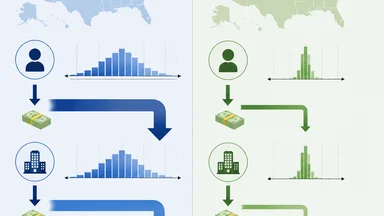
Every Medicare Advantage plan that covers prescription drugs operates with a hidden cash flow leak. The plan pays the pharmacy benefit manager for each claim at the point of sale, but the rebates that manufacturers pay—often 30–50% of the list price—arrive months later. That timing mismatch, called the rebate recovery lag, creates a float that the plan must finance. The cost of that financing, embedded in premiums, flows to beneficiaries who never see it. Three spread pricing gaps sustain the lag, contract terms widen it, and plan sponsors and regulators could take steps to close it.
The Three Spreads That Cost Plans Billions
The first spread is the gap between the list price of a drug and the net price after manufacturer rebates. PBMs negotiate rebates on behalf of plans, but they often keep a portion of the rebate as compensation—sometimes disclosed, sometimes not. The plan pays the list price at the pharmacy counter; the PBM collects the rebate later and remits only a share. As of late 2024, the average rebate on a brand-name drug in Medicare Part D was roughly 30–40% of list, but plans typically receive 80–90% of that rebate, with the PBM retaining the rest.
The second spread involves rebate guarantees. Many PBM contracts guarantee a minimum rebate percentage per drug class. If actual rebates fall short—because of patent expirations, new competitors, or formulary changes—the PBM must make up the difference, but only at the end of the contract year. In the meantime, the plan books the guaranteed amount as an asset. If the guarantee is not met, the plan absorbs the shortfall, often months after the claims were paid.
The third spread is the pharmacy DIR fee timing mismatch. Direct and indirect remuneration fees, which PBMs charge pharmacies after the point of sale, reduce the net cost of drugs. But DIR fees are typically reconciled quarterly or annually, long after the plan has paid the claim. CMS requires plans to report DIR fees in their bid submissions, but the actual collection lags behind the claim payment by 60 to 120 days. This lag inflates the plan's apparent drug spend and distorts premium calculations.
Together, these three spreads trap an estimated $12–15 billion in float across the Medicare Advantage market at any given time, according to an analysis by Milliman, a health economics consultancy. The float represents cash that the plan has paid out but not yet recovered. Financing that float—through borrowing or reduced investment income—adds roughly $500 million to $1 billion in annual costs that are ultimately passed to beneficiaries and taxpayers.
How Spread Pricing Became a Hidden Tax on Premium
Spread pricing did not emerge by accident. It evolved from the traditional PBM model, where the PBM kept a portion of rebates as compensation. Over the past decade, as plans pushed for more transparency, PBMs shifted to a “pass-through” model in which they charge an administrative fee and pass rebates to the plan. But the timing of that pass-through remains under the PBM's control. Standard contracts specify that rebates are remitted 30 to 90 days after the end of the quarter in which the claim was paid. In practice, many plans report receiving rebates 75 to 120 days after the claim date.
Carriers must cover the cash flow gap by drawing on corporate credit lines or reducing investment portfolios. The cost of that borrowing—typically at short-term interest rates that have ranged from 4% to 6% since 2022—is then built into the plan's premium rate filing. CMS reviews these filings and approves rates that include a “cost of capital” component, but the portion attributable to rebate float is rarely itemized. As a result, the float cost is invisible to beneficiaries and to most plan sponsors.
Medicare Advantage bids assume full recovery of rebates within a certain timeframe. If the actual lag exceeds that assumption, the plan's medical loss ratio worsens, and the plan may need to adjust premiums the following year. In a competitive market, plans that manage float well can underprice rivals by a few percentage points. Those that do not—often smaller plans with less negotiating leverage—face margin erosion that can force them to exit markets.
The hidden tax is not trivial. A medium-sized Medicare Advantage plan with $1 billion in annual drug spend and a 75-day average rebate lag carries roughly $200 million in outstanding rebate receivables at any point. Financing that receivable at 5% costs $10 million annually. Spread across 100,000 members, that adds $100 per member per year to premiums—money that never reaches providers or beneficiaries.
The Rebate Recovery Lag: A Three-Month Leak
Industry data from a 2024 survey of 30 Medicare Advantage plans shows the average rebate recovery lag is 75 days from the date of claim payment to the date the rebate is deposited in the plan's account. The largest plans—those with more than 500,000 members—report an average lag of 90 days. Smaller plans, with fewer than 100,000 members, report lags of 120 days or more. The discrepancy stems from differences in negotiating power: large plans can demand faster remittance, while smaller plans accept longer terms as the price of access to PBM networks.
The float value of the lag depends on interest rates. At the Federal Reserve's benchmark rate of roughly 5.25% as of late 2024, the annualized cost of a 75-day float on $12 billion in outstanding rebates is approximately $1.3 billion. If rates fall to 3%, the cost drops to $780 million. But even at lower rates, the float cost is real and persistent. Some plans treat it as a cost of doing business; others actively manage it by negotiating shorter remittance windows or using revolving credit lines designed for receivables.
Lost interest alone—the income the plan could have earned if it had the cash earlier—exceeds $500 million annually across the Medicare Advantage market, based on conservative assumptions. That figure excludes the cost of borrowing to cover the gap, which can be higher for plans with lower credit ratings. A plan rated BBB might pay 150 basis points above the benchmark rate, adding another $200 million to the industry's total float cost.
The lag also affects the accuracy of plan bids. CMS requires plans to submit bids nine months before the plan year begins. Those bids must estimate rebate amounts and timing. If actual rebates fall short or arrive later than assumed, the plan's financial performance diverges from the bid. In 2023, CMS data showed that about 40% of Medicare Advantage plans had actual rebate collection rates that deviated from their bid assumptions by more than 5%, leading to mid-year adjustments that disrupted member benefits.
PBM Contract Terms That Widen the Gap
Several standard PBM contract terms exacerbate the rebate recovery lag. The first is the guaranteed rebate percentage. PBMs often guarantee that rebates will equal at least X% of list price for a given class. If actual rebates fall short, the PBM must pay the difference, but only after a year-end reconciliation. In the meantime, the plan finances the shortfall. A 2023 analysis by Deloitte found that guaranteed rebate percentages in Medicare Part D contracts averaged 35% for brand-name drugs, but actual rebates averaged 32%, meaning plans financed a 3% shortfall for an average of 180 days.
Brand-to-generic shifts reset the collection timeline. When a brand drug loses patent protection and generic competitors enter, rebates on the brand drug disappear. But PBM contracts often stagger the rebate guarantee across classes, so the plan may still be owed rebates on the brand drug months after the generic launch. The PBM has little incentive to accelerate collection; the longer the lag, the more float income the PBM earns if it holds the cash before remitting.
Exclusive pharmacy networks also delay data feeds. Some PBMs require plans to use a specific network of pharmacies, which limits the plan's ability to verify claims and rebates independently. The PBM controls the data flow and can set the timing of rebate calculations. Plans that audit their PBM's rebate calculations often find that the audit rights are exercisable only after a 90-day window from the end of the quarter, by which time the PBM has already earned substantial float income.
Audit rights themselves are rarely exercised within the lag window. A 2024 survey by the National Association of Insurance Commissioners found that only 20% of Medicare Advantage plans audited their PBM's rebate calculations within the past two years. The cost of an audit—typically $50,000 to $200,000—is a barrier for smaller plans. Without audits, plans rely on PBM-reported data, which may understate the lag or overstate rebate amounts. Standard contract terms favor the PBM, which has the data and the legal authority to set remittance schedules.
Technology That Could Tighten the Float
Several technology solutions have emerged to reduce the rebate recovery lag, though adoption remains limited. Real-time claims adjudication systems, already used by some PBMs for pharmacy benefit management, can shorten the lag by 20 days or more by automating rebate calculations at the point of sale. Instead of waiting for quarterly reconciliations, the system calculates the expected rebate immediately and adjusts the plan's payment accordingly. As of late 2024, roughly 15% of Medicare Advantage plans had implemented such systems, according to a survey by SSR Health, a pharmaceutical pricing analytics vendor.
Blockchain-based rebate settlement is being piloted by three large third-party administrators. The technology creates a shared ledger where manufacturers, PBMs, and plans can record rebate obligations and payments in real time. Once a claim is adjudicated, the rebate obligation is recorded on the blockchain, and settlement can occur automatically when the manufacturer pays the PBM. Early pilots have reduced the lag from 75 days to under 30 days. However, the technology requires all three parties to participate, and manufacturers have been slow to adopt due to concerns about data sharing.
Artificial intelligence models can predict rebate collection timing per drug class, allowing plans to forecast float costs more accurately. A handful of plans now use machine learning to estimate when rebates will arrive based on historical patterns, manufacturer payment cycles, and contract terms. These models help plans set aside appropriate reserves and negotiate better terms. One regional plan reported reducing its float cost by 15% after implementing an AI-based forecasting tool.
Automated reconciliation systems can reduce the manual 45-day hold that many plans impose before recognizing rebate revenue. Instead of waiting for a human to match rebate payments to claims, these systems automatically match payments to open receivables using algorithms. Plans that have adopted automated reconciliation report cutting the recognition lag by 30 to 40 days. The challenge is that many plans still rely on spreadsheets and manual processes, partly because PBM data formats vary and require custom integration.
CMS could mandate a 30-day rebate settlement rule, similar to the prompt payment standards that apply to provider claims. The agency has proposed a rule in 2025 that would require PBMs to remit rebates to Medicare Advantage plans within 30 days of the end of each month. If enacted, the rule could shrink the average lag from 75 days to 30 days, reducing the float cost by roughly 60%. The PBM industry has pushed back, arguing that the rule would increase administrative costs and reduce the rebates available to plans.
What Plan Sponsors Can Do Now
Plan sponsors are not powerless. The first step is to negotiate rebate payment terms during the request-for-proposal process. Instead of accepting standard 60–90 day remittance, sponsors can demand 30-day remittance or tiered terms that reward faster payment. Some large employers have already done this, and a few regional Medicare Advantage plans have followed suit. The key is to make rebate timing a scored criterion in the PBM selection process, not an afterthought.
Requiring weekly rebate status reporting gives sponsors visibility into the lag. Most PBMs provide quarterly reports; weekly reports would allow sponsors to identify delays early and escalate. A 2024 pilot by Blue Shield of California found that weekly reporting reduced the average lag by 12 days because the PBM knew the plan was monitoring the data. The reporting requirement can be written into the contract as a performance standard.
Auditing rebate collection at the 60-day mark, rather than waiting for year-end, can catch errors and delays before they compound. Sponsors can hire third-party auditors to review a sample of rebate calculations and remittance timing. The cost of the audit is often recovered through identified underpayments. PRECISIONvalue, an audit firm, reported that its clients found an average of 3% in missed rebates, which more than covered the audit fee.
Modeling float cost in premium rate filings is essential for accurate pricing. Sponsors should work with actuaries to estimate the cost of the lag under different interest rate scenarios and include that cost explicitly in the bid. CMS allows plans to include a cost-of-capital component, but many plans do not itemize the float cost. By making it visible, sponsors can justify premium adjustments and hold PBMs accountable for the cost they create.
Shifting to net-price contracting, where rebates are applied at the point of sale rather than after the fact, eliminates the lag entirely. Some PBMs now offer net-price options for certain drug classes, though adoption is low because it requires manufacturers to pay rebates earlier. The Inflation Reduction Act's redesign of Part D, which moves catastrophic coverage costs to manufacturers, may create incentives for net-price models. Sponsors should ask PBMs for net-price quotes alongside traditional spread-based quotes.
The Regulatory Window for Change
CMS has signaled interest in addressing the rebate recovery lag. A proposed rule released in early 2025 would require PBMs to remit rebates to Medicare Advantage plans within 30 days of the end of each month. The rule is part of a broader effort to increase transparency in drug pricing. Public comments from PBM trade groups argue that the rule would disrupt existing contracts and increase administrative costs, but consumer advocates and plan sponsor organizations support it. The rule is expected to be finalized in late 2025, with implementation in 2027.
The National Association of Insurance Commissioners has also taken up the issue. Its model act on PBM regulation, updated in 2024, includes provisions that prohibit spread pricing in state-regulated health plans and require prompt rebate remittance. As of late 2024, 12 states had adopted some version of the model act, though only for commercial plans, not Medicare Advantage. Federal preemption limits state authority over Medicare plans, but the NAIC model act sets a standard that could influence CMS.
State Medicaid programs have already banned spread pricing for pharmacy benefits. In 2023, 28 states prohibited PBMs from charging plans more than the net cost of a drug, effectively eliminating the spread. These states have seen reductions in drug spending and improved cash flow for plans. The experience in Medicaid suggests that banning spread pricing in Medicare Advantage would similarly reduce the float cost, though the transition would be complex given the scale of the Part D program.
Medicare Advantage plans and their trade associations have lobbied to maintain the status quo, arguing that spread pricing allows PBMs to negotiate higher rebates. They contend that a 30-day remittance rule would reduce rebates by 5–10% because manufacturers would lose the float benefit. Independent analyses are mixed: some show that rebates would decline slightly, while others find that the savings from reduced float would offset any reduction. The trade-off is real, and reasonable people disagree on the net effect.
If the lag shrinks, premiums could drop by 2–4% in Medicare Advantage, according to estimates from the actuarial firm Milliman. That would represent $8–16 billion in savings for beneficiaries and taxpayers over five years. The savings would come from lower borrowing costs, reduced investment losses, and more accurate bid assumptions. But the path to that outcome requires either regulatory mandate or market pressure. Without action, the float will continue to leak value from the program.