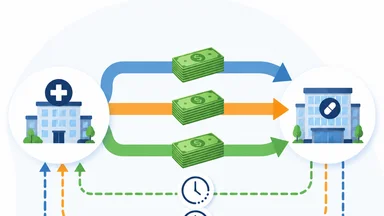
Health Insurance Premium Flow Tracks Prior Authorization Log Date Gap
The prior authorization process in health insurance is designed to ensure that expensive or elective services are medically necessary before they are delivered. But a subtle timing gap—between when an authorization is logged and when the claim is submitted—can turn this safeguard into a leaky pipe for premium dollars. When claims arrive weeks or months after the authorization date, many carriers' systems automatically pay them without re-checking the authorization log. The result: money flows out for services that may never have been properly vetted, and reinsurance treaties designed to cover only authorized care are left exposed.
The Prior Authorization Gap That Leaks Premium
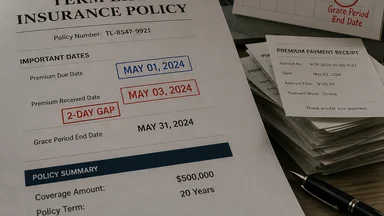
Prior authorization is a gatekeeping function. A provider requests approval for a procedure, the insurer reviews medical necessity, and if approved, a log entry is timestamped. The expectation is that the claim will follow within a reasonable window. But when the claim arrives late—say, 60 or 90 days after the authorization date—many claims adjudication systems treat it as a clean match. The log entry exists, so the claim pays. The gap between the log date and the claim submission date is rarely scrutinized.
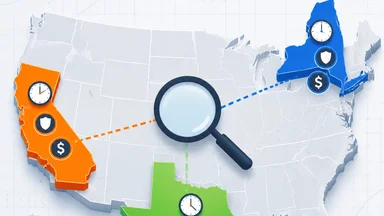
This gap varies by plan type. Preferred provider organization (PPO) plans, which often have looser network controls, tend to see longer delays than health maintenance organization (HMO) plans, where primary care physicians coordinate referrals. As of late 2024, one large national insurer estimated that roughly 12-18% of its prior-authorized claims had a log-to-claim gap exceeding 30 days. In a subset of those, the gap exceeded 90 days, meaning the premium reserves set aside for those services had been sitting idle while the claim was still pending.
The delay triggers automatic payment because the system sees a valid authorization number. But the clinical review that underpinned the authorization may have been based on outdated patient information or a changed condition. By the time the claim arrives, the service may no longer be appropriate. The carrier loses the leverage to deny a non-compliant service because the authorization was already granted. The gap effectively mutes the utilization management function.
Some carriers have attempted to address this by requiring claims to be filed within 30 days of service, but enforcement is inconsistent. In practice, many provider contracts allow up to 180 days for claim submission. The authorization log date is not always cross-referenced at the point of payment. As a result, the gap becomes a blind spot in the premium flow.
How Money Flows Through the Authorization Void
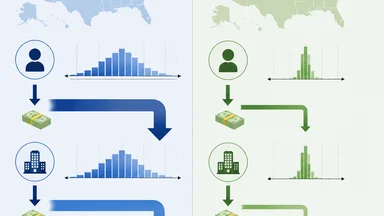
Premium dollars are collected upfront, based on projected claims costs. Actuaries build in assumptions about claims latency—the time between service and payment. When prior authorizations are logged but claims are delayed, the premium reserves for those services remain on the carrier's books longer than expected. This creates a cash flow distortion: the carrier holds money that is notionally earmarked for a claim that may never come, or may come after the policy period ends. At the same time, if a provider submits a claim with a valid authorization number, the system pays it quickly—often within 10-15 days—because the medical necessity check is assumed to have been done. The gap between log and claim is invisible to the automated workflow. This means that even if the service was never actually performed, or was performed on a different patient, the payment goes out before any manual review can catch it.
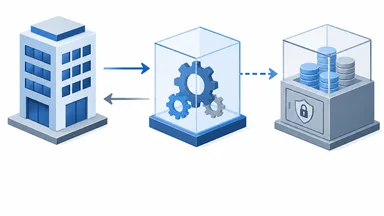
Reinsurance treaties add another layer of complexity. Most reinsurance agreements explicitly exclude coverage for unauthorized care. The ceding carrier is supposed to only cede premium for services that have been properly authorized. But if the authorization log date is not matched to the claim date, the reinsurer may receive premium for a service that was technically unauthorized—because the claim was filed outside the allowed window. The reinsurer then bears risk for a service it never agreed to cover.
Ceded premium flows without matching loss data, creating a reconciliation headache. Reinsurers often demand retrospective audits to recover overpayments. These audits can take months and strain the relationship between ceding carrier and reinsurer. Some large reinsurers have begun requiring quarterly data submissions that include authorization log dates and claim submission dates, precisely to catch this timing mismatch.
Case Study: A Regional Plan's $4.1M Leak
A Midwest Blue Cross affiliate, which we will call Plan A to avoid identifying the specific company, conducted an internal audit of its prior authorization logs for the 2022-2023 policy years. The audit found that 14% of prior authorizations had no corresponding claim filed within 90 days of the authorization date. Yet the premium reserves for those services had already been set aside, and in many cases, the claims were eventually paid when they arrived months later.
The audit team cross-referenced the authorization log with the claims system and discovered that roughly $4.1 million in claims had been paid on authorizations where the log-to-claim gap exceeded 120 days. In some instances, the claim was filed after the patient had disenrolled from the plan, meaning the premium collected did not cover that period. The carrier was able to retroactively deny roughly $2.8 million of those claims, but the remaining $1.3 million had already been paid out and could not be recovered from providers.
The state insurance regulator required Plan A to submit a corrective action plan. The plan included automated flags for any claim filed more than 60 days after the authorization log date, and a manual review of all such claims before payment. The carrier also revised its provider contracts to require claim submission within 30 days of service for any prior-authorized procedure. The result was a roughly 40% reduction in the number of late-filed claims in the following year.
This case illustrates that the gap is not just a theoretical risk. It has real dollar amounts attached. And because the gap is a systems issue—not a deliberate fraud in every case—it often goes unnoticed until an audit or a regulatory review brings it to light. The $4.1 million figure is small relative to the carrier's total premium, but it represents a pure leakage that could have been prevented with better data matching.
Mechanics of the Timing Mismatch
The timing mismatch has several root causes. First, the authorization log is typically maintained in a separate system from the claims adjudication platform. Integration between the two is often batch-based, not real-time. When a claim arrives, the system checks for a matching authorization number but does not always compare dates. If the authorization number exists, the claim is considered valid regardless of when it was filed.
Second, manual reconciliation is rare in high-volume settings. A large carrier may process tens of thousands of prior authorizations per day. Having a human review each one for timeliness would be prohibitively expensive. Automated flags are typically set only for extreme outliers—claims filed more than 180 days after the service date. The 30-to-90-day gap falls below that threshold and escapes notice.
Third, the gap is exploited by both legitimate providers who are simply slow to bill and by organized fraud rings. Legitimate providers may delay billing due to administrative backlogs or cash flow management. Fraud rings, however, deliberately stage authorizations for procedures they never intend to perform, then file claims later under a different patient identity or after the policy has lapsed. The gap gives them cover because the system sees a valid authorization.
Some carriers have attempted to close the gap by requiring electronic prior authorization submissions that automatically populate the claims system. But these systems are not yet universal. As of 2024, roughly 60% of prior authorizations are still submitted via phone or fax, according to industry surveys. Those manual submissions are more prone to data entry errors and delays, making the timing mismatch worse.
Ring Tactics: Staging Authorizations for Delayed Billing
Organized fraud rings have identified the authorization gap as a vulnerability. A common tactic is to obtain a prior authorization for a legitimate-sounding procedure—say, a knee MRI or a colonoscopy—using a real patient's information. The authorization is logged, but the procedure is never performed. The ring then waits several weeks or months before submitting a claim for the same procedure, often using a different provider number or a slightly different patient identifier.
Because the authorization number is still active in the system, the claim pays. The ring collects the payment, and the patient may never know that a claim was filed in their name. In some cases, the ring uses multiple authorizations for the same patient across different dates, creating a pattern of low-dollar claims that fly under the radar. Special investigative units (SIUs) have begun using data analytics to flag providers who consistently file claims 60-90 days after authorization, a pattern that correlates with staged billing.
Another variant involves obtaining authorizations for services that are never rendered, then billing for them after the patient has disenrolled from the plan. The carrier's system may not check enrollment status at the time of payment, especially if the authorization was obtained while the patient was still covered. The gap between authorization and claim allows the ring to exploit the lag in enrollment data updates. This tactic is particularly common in individual market plans with high turnover.
SIU teams have developed models that score providers based on the average time between authorization and claim submission. Providers in the top decile of delay are flagged for audit. One regional carrier reported that its SIU unit identified roughly $2 million in fraudulent claims in 2023 using this approach. The key indicator was not the amount of the claim but the timing pattern. The gap itself became the red flag.
Plugging the Gap: Technology and Contract Fixes
Several technology solutions have emerged to close the authorization gap. Real-time claim-to-authorization matching at the point of submission is the most straightforward. When a provider submits a claim, the system checks not only that an authorization exists but also that the claim date falls within a predefined window—typically 30 days from the authorization date. If the claim is outside that window, it is automatically denied or routed for manual review.
Contract fixes are equally important. Many provider agreements now include a clause requiring claim submission within 30 days of service for any prior-authorized procedure. Non-compliance can result in denial of payment. Some carriers have also added language that the authorization is void if the claim is not filed within 60 days. These contractual provisions give the carrier a legal basis to deny late claims, but they require consistent enforcement.
Machine learning models are being trained to detect delayed billing patterns. These models look at the distribution of authorization-to-claim intervals for each provider and flag outliers. They also incorporate patient-level data, such as whether the patient was still enrolled at the time of claim submission. One vendor that provides such analytics reported a roughly 40% reduction in authorization leakage for its clients, based on a 2023 study of five large health plans.
However, these solutions are not without trade-offs. Tightening the window can lead to legitimate claims being denied, causing provider friction and patient complaints. Carriers must balance fraud prevention with access to care. Some have adopted a tiered approach: automatic denial for claims filed more than 90 days after authorization, and manual review for claims filed between 30 and 90 days. This reduces the burden on providers while still catching the most egregious delays. Moreover, implementing real-time matching requires significant IT investment and integration across legacy systems, which can be a barrier for smaller carriers. Provider pushback is also common, as tighter submission windows may disrupt their billing cycles. Regulators must weigh the benefits of reduced leakage against the risk of legitimate claims being denied due to administrative errors.
Takeaways for Insurers and Regulators
For insurers, the first step is to audit prior authorization logs quarterly for timing gaps. This means comparing the authorization log date to the claim submission date for a sample of claims. The audit should stratify by provider, plan type, and procedure code to identify patterns. Carriers that have done this have found leakage rates of 10-20%, suggesting that the gap is widespread.
Claims adjudication rules should be updated to require a log match at the time of payment. This is a systems change, but it is relatively low-cost compared to the potential savings. Many claims platforms already have the capability to check authorization dates; they simply are not configured to do so. Turning on this feature can close the gap without requiring new software.
SIU staff should be trained on delayed-billing red flags. The timing gap is a behavioral indicator that is often overlooked in favor of more obvious fraud signals, such as unusual procedure codes or high dollar amounts. Training SIU analysts to look at the time dimension can uncover schemes that would otherwise go undetected.
Coordination with reinsurers on data-sharing protocols is also critical. Reinsurers need access to authorization log dates to verify that the premium they are ceding corresponds to authorized services. Some carriers have begun sharing this data in quarterly reports, and reinsurers are increasingly using it to adjust pricing or demand refunds. The National Association of Insurance Commissioners (NAIC) published guidance in 2023 recommending that carriers include authorization log dates in their data submissions to reinsurers.
Regulators should consider requiring carriers to report the percentage of claims paid with an authorization-to-claim gap exceeding 30 days. This metric would provide transparency and allow for benchmarking across the industry. However, such reporting requirements must be designed carefully to avoid unintended consequences, such as carriers gaming the metric by adjusting their authorization log dates. The NAIC's 2023 guidance is a step in that direction, but adoption has been uneven. As the case study shows, the gap is real and measurable. Closing it benefits carriers, reinsurers, and ultimately policyholders by keeping premium dollars where they belong, but the path to closure requires balancing operational efficiency with provider relations and regulatory oversight.
This article is for informational purposes only and does not constitute professional insurance, legal, or financial advice. Readers should consult qualified professionals for guidance specific to their situation.