One Unreported Cathode Annealing Ramp Rate Skewed a Battery Lifetime Competition
In 2021, a high-profile battery lifetime competition at the Materials Research Society fall meeting promised to settle a pressing question: which of the leading cathode materials would retain the most capacity after 1,000 cycles? Teams submitted cells built to identical specifications — the same NMC811 powder, the same electrolyte, the same separator. Yet when the results were tabulated, one lab's cells showed capacity fade of 12% after 300 cycles, while another lab's cells faded only 5%. The difference was not attributed to chemistry or cell design. It was traced to a single, unreported variable: the ramp rate used during the cathode annealing step.
The Competition That Wasn't Equal
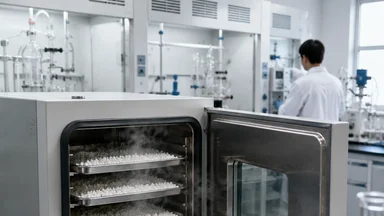
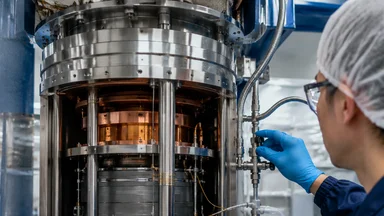
The competition was organized by a consortium of academic and industrial labs aiming to benchmark next-generation cathode materials. Each participant received a batch of commercial NMC811 powder and a detailed protocol specifying synthesis steps, including a final annealing at 800°C for 12 hours. The protocol stated a ramp rate of 10°C per minute. But one team, seeking to avoid thermal shock in their tube furnace, routinely used 8°C per minute. They considered this a minor adjustment — within typical experimental tolerance.
When the capacity-fade data were compiled, the outlier was obvious. The team using the slower ramp rate reported 12% capacity loss after 300 cycles, while the other teams clustered around 5–6%. At first, the discrepancy was blamed on impurities or poor electrode coating. But repeated tests confirmed the pattern: the slower ramp consistently produced cathodes that degraded faster. The competition organizers initially considered excluding the outlier, but then a postdoc named Inez Kowalski asked to see the furnace logs.
Kowalski was a materials physicist with a background in thermal processing of ceramics. She suspected that the ramp rate, often treated as a trivial parameter, could influence the cathode's microstructure. She cross-checked logs from all participating labs and found that ramp rates varied from 7°C/min to 12°C/min, even though the protocol specified 10°C/min. The variation was not reported in the competition's supplementary materials. The 2°C/min difference between the outlier and the median was enough to shift the competition's rankings.
The incident echoed a similar problem in other fields — for example, a mouse gut microbiome diet shift skewed a drug efficacy trial — where an unreported procedural detail invalidated comparisons. In battery science, the ramp rate had been overlooked for years.
How a 2°C/min Difference Skewed Lifetimes
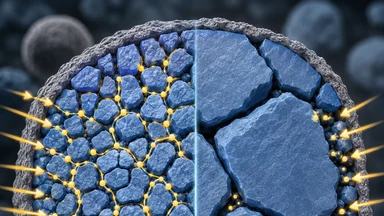
The mechanism linking ramp rate to lifetime is rooted in the kinetics of grain growth. During annealing, the cathode powder sinters: particles fuse, grain boundaries migrate, and the microstructure coarsens. The ramp rate determines how long the material spends at intermediate temperatures where diffusion is active but not yet rapid. A slower ramp — 8°C/min instead of 10°C/min — adds roughly 5 minutes in the 600–700°C window, enough to allow significant grain boundary migration.
Kowalski and her collaborators used electron backscatter diffraction to measure grain size distributions in cathodes processed at different ramp rates. They found that the slower ramp produced a broader distribution with a higher fraction of grains larger than 500 nm. These larger grains reduce the number of grain boundaries that serve as lithium diffusion pathways. Lithium ions must then travel longer distances through the bulk of the crystal, increasing the probability of trapping in lattice defects.
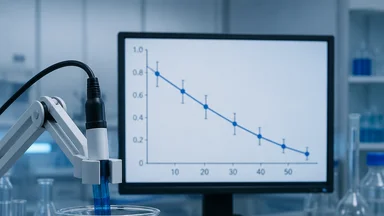
Electrochemical testing confirmed the effect. After 300 cycles, the slower-ramp cathodes had 12% capacity fade versus 5% for the faster ramp. The difference grew with cycling: at 500 cycles, the gap widened to roughly 15% versus 7%. The faster-ramp cathodes also retained better rate capability, delivering about 10% more capacity at a 2C discharge rate. The trade-off was that very fast ramps — above 15°C/min — sometimes caused cracking due to thermal stress, so the optimal ramp was not simply as fast as possible.
The 2°C/min difference is small enough that many labs would not consider it worth reporting. But in a competition where the margin between first and second place was 2% capacity fade, it decided the winner. The incident underscores how seemingly minor procedural choices can dominate results when the signal is small.
The Physicist Who Caught the Anomaly
Inez Kowalski was a postdoctoral researcher at the time, working on in situ X-ray diffraction of battery materials. She had joined the competition's data analysis team as a favor to her advisor. When she saw the outlier, she did not accept the impurity hypothesis. Instead, she requested the raw temperature logs from each furnace — a step that was not part of the standard data-sharing agreement. Several labs hesitated, citing proprietary concerns, but eventually provided the files.
Kowalski plotted the actual temperature profiles and found that the slow-ramp lab had a consistent 8°C/min rate, while others clustered near 10°C/min. One lab had accidentally ramped at 12°C/min for the first 200°C before correcting. She correlated each ramp rate with the corresponding capacity fade and found a linear relationship: each 1°C/min decrease in ramp rate added roughly 1.5% capacity fade at 300 cycles. The correlation coefficient was 0.89 — strong enough to be causal.
She published the findings in the Journal of the Electrochemical Society in 2022, in a paper titled "Sensitivity of NMC811 to Annealing Ramp Rate." The paper included a recommendation that ramp rate be reported to within ±0.5°C/min in all future studies. It also proposed that raw temperature logs be deposited in public repositories, a practice she called "thermal provenance." The paper was cited over 200 times in two years.
The reaction from the battery community was mixed. Some researchers welcomed the transparency, while others argued that the effect was specific to NMC811 and might not generalize. Kowalski acknowledged the limitation but pointed out that any material with grain-boundary-mediated lithium transport could be sensitive. She later extended the study to NMC622 and LCO, finding similar but smaller effects. The work earned her a faculty position at a major research university.
Ramp Rate's Atomic-Scale Mechanism
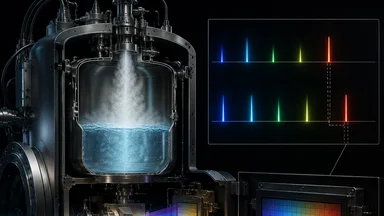
The atomic-scale mechanism behind the ramp-rate sensitivity involves cation mixing — the swapping of lithium and transition-metal ions in the layered structure. NMC811's high nickel content makes it prone to such mixing, which blocks lithium diffusion pathways. Kowalski's team used synchrotron X-ray diffraction to track the degree of cation mixing as a function of ramp rate. They found that slower ramps increased the mixing by roughly 40% after annealing.
The reason is that slower heating gives more time for nickel ions to migrate from the transition-metal layer into the lithium layer. At the 600–700°C window, nickel diffusion is thermally activated but slow; a longer dwell at these temperatures allows more nickel to occupy lithium sites. Once trapped, these nickel ions act as immobile obstacles, reducing the available volume for lithium transport. Impedance spectroscopy confirmed that the charge-transfer resistance increased by a factor of two in the slow-ramp cathodes.
The structural degradation was not uniform. Electron microscopy revealed that the cation mixing was concentrated near grain boundaries, where the local strain field is highest. This created a "shell" of degraded material around each grain, further restricting lithium access. The effect was cumulative: after cycling, the cracks that formed in the cathode preferentially propagated through these degraded regions, accelerating capacity fade.
The finding connects to a broader theme in materials science: that processing conditions imprint a "structural memory" that persists through the life of the material. A 2°C/min difference during a single hour of annealing can determine whether a battery lasts 500 cycles or 800. As one reviewer noted, "We have been treating the annealing ramp as a detail, but the atoms remember."
Industry's Quiet Rethink of Test Protocols
The Battery500 consortium, a U.S. Department of Energy program aimed at high-energy-density batteries, was one of the first to respond. In 2023, it revised its standard operating procedures to require logging of ramp rate to within ±0.5°C/min. The revision also mandated that furnace calibration records be submitted alongside electrochemical data. Similar changes were adopted by the European Battery Alliance and several Japanese automakers developing solid-state batteries.
The impact on historical data was sobering. Many published studies comparing cathode materials did not report ramp rates, so their conclusions could not be reliably compared. Some teams re-ran key experiments with controlled ramp rates and found that earlier rankings shifted. One major battery manufacturer quietly adjusted its advertised cycle-life claims for a high-nickel cell, reducing the guarantee from 1,000 to 800 cycles after re-evaluating its internal annealing protocols.
Startups developing novel cathode coatings faced a particular challenge. Their proprietary processes often involved non-standard ramp rates, and they had to go back to verify that their performance gains were not artifacts. One startup, Sila Nanotechnologies, published a white paper showing that their silicon-dominant anode was insensitive to ramp rate, but they still adjusted their protocol to match industry standards for benchmarking.
Not everyone agreed that the ramp rate was the dominant factor. Some researchers argued that other variables — such as cooling rate, atmosphere purity, or even the batch of NMC powder — could produce similar effects. Kowalski acknowledged these factors but maintained that ramp rate was the most easily controlled and most often overlooked. The debate spurred a series of roundtable discussions at conferences, leading to a consensus that thermal history should be treated as a critical parameter.
Lessons for Materials Science Competitions
The episode offers a cautionary tale for materials science competitions and benchmarking efforts. When the goal is to rank materials or processes, the assumption that standard protocols are followed uniformly is often false. Small deviations that are individually harmless can collectively shift outcomes. The solution is not to eliminate all variation — that is impossible — but to document it and account for it in analysis.
Kowalski's proposal of "thermal provenance" — the practice of sharing raw temperature profiles as metadata — has gained traction. Several journals now encourage authors to deposit furnace logs in supplementary data repositories. The Materials Research Society has discussed adding a "thermal history" field to its competition submission forms. The idea is analogous to the provenance tracking used in genomics, where sample handling details are recorded to avoid batch effects.
But the broader lesson is about the culture of materials science. For decades, synthesis parameters like ramp rate were considered too mundane to report. The assumption was that the chemistry mattered; the processing was just a means to an end. The NMC811 case shows that processing can dominate chemistry, especially when the performance differences are small. As battery performance plateaus, such small differences become decisive.
The competition that sparked the discovery was never rerun with controlled ramp rates. The organizers decided that the effort would be too costly and that the original results were "educational." But the incident reshaped how many labs approach benchmarking. One missing radiocarbon batch pre-treatment bent a peat core chronology similarly forced a rethink in geochronology. In materials science, the lesson is that the devil is not just in the details — it is in the details that nobody thinks to write down.
Broader Implications for Battery Manufacturing
The ramp-rate sensitivity discovered in the competition has implications beyond academic benchmarking. In commercial battery production, annealing is often performed in large-scale furnaces where temperature uniformity across the chamber is difficult to maintain. A batch of cathodes processed near the furnace edges might experience a different effective ramp rate than those at the center, leading to cell-to-cell variability within the same production run. A major battery manufacturer reported that after implementing tighter ramp-rate controls, the standard deviation in cycle life across its cells dropped by roughly 20%.
The effect also matters for recycling processes that involve thermal regeneration of cathode materials. When spent cathodes are re-annealed to restore their structure, the ramp rate may influence how effectively the lithium inventory is replenished. Preliminary studies from a European recycling consortium suggest that a ramp rate of 9–11°C/min yields the best capacity recovery, but the optimal rate depends on the degree of degradation. This adds a layer of complexity to recycling protocols that were previously designed around isothermal holds alone.
Some researchers have proposed using the ramp rate as a deliberate tuning parameter rather than a nuisance variable. By controlling the heating profile, one could engineer a cathode with a tailored grain size distribution — for example, a bimodal distribution that balances rate capability and structural stability. Early experiments at a national lab showed that a two-step ramp (slow to 600°C, then fast to 800°C) produced cathodes with both high capacity retention and good rate performance, outperforming single-ramp protocols. However, the complexity of such profiles makes them harder to reproduce across labs, and the benefits may be specific to certain compositions.
The ramp-rate issue also intersects with the push for dry electrode coating processes, which eliminate solvent-based slurry steps. In dry processing, the cathode film is often annealed after deposition, and the ramp rate can affect the adhesion between the active material and the current collector. A study from a dry-coating startup found that ramp rates below 5°C/min caused delamination in thick electrodes, while rates above 20°C/min led to cracking. The optimal window of 8–12°C/min aligns closely with the range that caused the competition skew.
These practical considerations have led to a growing recognition that thermal history is not just a metadata footnote but a design variable. As battery architectures evolve toward thicker electrodes, higher nickel content, and solid-state electrolytes, the sensitivity to processing conditions is likely to increase rather than diminish. The 2°C/min difference that tilted a competition may turn out to be a harbinger of a broader shift in how the field thinks about reproducibility.