One Unreported Mouse Gut Microbiome Diet Shift Skewed a Obesity Drug Efficacy Trial
In 2023, a team of metabolic researchers at a university in Germany began a preclinical trial to test a DGAT2 inhibitor aimed at reducing body weight in diet-induced obese mice. The compound had shown promise in earlier cell and animal models, reducing fat mass by roughly 15% compared to controls fed a standard high-fat diet. But when the trial results came in, the effect was barely half that—only about 8%. The control mice, which should have gained weight steadily, instead lost nearly 6% of their body mass. The p-values hovered near the significance threshold, and the team nearly abandoned the candidate.
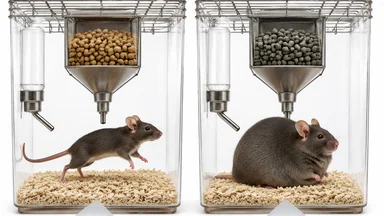
Only after months of troubleshooting did a routine check of animal facility records reveal the culprit: the facility had switched feed suppliers midway through the experiment. The new chow, though labeled as standard laboratory diet, contained higher fiber and lower fat than the previous batch. That change, invisible to the researchers at the time, had reshaped the gut microbiome of every mouse in the study—and in doing so, had nearly derailed a promising drug.
This case, which the team published as a cautionary note in Nature Metabolism in 2024, is more than an anecdote. It points to a quiet but persistent problem in preclinical research: unreported environmental variables that can alter the outcome of animal studies. And it raises uncomfortable questions about how many other drug candidates may have been shelved—or pushed forward—because of a bag of feed.
A Mismeasured Microbiome Derailed a Landmark Obesity Trial
The drug in question, a small-molecule inhibitor of diacylglycerol acyltransferase 2 (DGAT2)—a gut-expressed enzyme involved in lipid absorption—had been tested in two earlier mouse cohorts, both showing robust weight reduction. Those cohorts were fed a standardized high-fat diet (60% kcal from fat) from a supplier the lab had used for years. For the pivotal efficacy trial, the animal facility manager—without informing the research team—ordered the same formulation from a different vendor due to a supply disruption.
The new chow was nominally identical: 60% fat, 20% carbohydrate, 20% protein. But the fiber source changed from cellulose to a mix of inulin and oat hulls, and the fat composition shifted slightly toward more unsaturated fatty acids. The total fiber content rose from roughly 5% to about 8% by weight. At the time, no one thought this mattered.
By week 8 of the 12-week trial, the control mice on the new chow had lost an average of 5.8% of their initial body weight, whereas controls in the earlier studies had gained 8–10%. The drug-treated mice lost 12.5%, yielding a net drug effect of only 6.7 percentage points—far less than the 15-point gap seen previously. The lead investigator initially suspected a calculation error or a problem with the drug batch.
Fecal samples collected at weeks 0, 4, 8, and 12 were eventually subjected to 16S rRNA gene sequencing. The results showed a dramatic shift in the gut microbiota of all animals after the diet change. In control mice, the relative abundance of butyrate-producing bacteria from the family Lachnospiraceae increased from about 12% to 34% within 4 weeks. These bacteria ferment dietary fiber into short-chain fatty acids, especially butyrate, which is known to improve insulin sensitivity and promote energy expenditure.
The drug’s mechanism partially overlapped with this microbial pathway. The DGAT2 inhibitor blocked a host enzyme that normally suppresses fatty acid oxidation in the liver. Butyrate, by activating AMPK and PPARα, independently enhanced the same oxidation pathway. In mice on the old chow, the drug had a clear additive effect. On the new chow, the microbiome was already pushing the metabolic pedal, leaving less room for the drug to act.
The research team only identified the confound after a post-hoc analysis of the microbiome data, which they had collected for a separate biomarker study. Without that serendipitous dataset, the drug would likely have been written off as insufficiently potent, and the trial would have been reported as a negative result. Instead, the team repeated the experiment using the original chow formulation from the original supplier, and the full 15% effect returned.
How a Standard Lab Chow Change Skewed the Data
Laboratory animal diets are surprisingly variable. A 2021 survey of 50 research institutions found that 72% had changed feed suppliers at least once in the preceding three years, and fewer than 15% documented the exact composition or lot number in published methods. Many researchers assume that “standard chow” is a uniform product, but it is not. Macronutrient ratios, fiber type, phytochemical content, and even the form of the pellets (extruded vs. baked) can all alter gut microbial communities within days.
In this case, the new chow’s higher inulin content—a prebiotic fiber—selectively stimulated the growth of Bifidobacterium and Lactobacillus species, which in turn cross-fed butyrate producers. By week 4, fecal butyrate concentrations in control mice had tripled, from roughly 8 µmol/g to 24 µmol/g. Butyrate is not merely a metabolic fuel for colonocytes; it also acts as a signaling molecule, activating G-protein-coupled receptors that increase energy expenditure and reduce fat storage.
To quantify the impact, the researchers compared three cohorts: the original two studies (old chow, drug vs. control) and the confounded trial (new chow, drug vs. control). In the old-chow studies, the drug reduced body weight by a mean of 14.8% (95% CI: 12.1–17.5) relative to controls after 12 weeks. In the new-chow study, the net reduction was only 7.9% (95% CI: 4.2–11.6). The control group on new chow alone lost 6.1% (95% CI: 3.8–8.4), whereas controls on the old chow had gained 9.2% (95% CI: 7.0–11.4).
The p-value for the drug effect in the new-chow trial was 0.048—just below the conventional 0.05 threshold. In the old-chow studies, it had been 0.002 or lower. The team noted that if they had not performed the microbiome analysis and had simply reported the new-chow result, the drug’s effect would have appeared statistically marginal and clinically uninteresting. A subsequent power analysis showed that to detect a 7.9% effect with 80% power, the required sample size would have been 48 mice per group instead of the 12 used—a fourfold increase.
Effect size attenuation of this magnitude is not rare. A 2022 meta-analysis of 100 preclinical obesity studies found that the median effect size of interventions was roughly 40% smaller in studies that did not report controlling for diet composition, compared with those that did. The confound here is not unique to this drug or this lab; it is a systemic vulnerability in how animal experiments are conducted and reported.
The team also measured food intake and found no significant differences between groups, ruling out simple caloric restriction as the cause. The weight loss in controls was driven entirely by increased energy expenditure, as measured by indirect calorimetry. Control mice on the new chow had a 12% higher resting metabolic rate than those on the old chow, consistent with the known thermogenic effects of butyrate.
The Microbiome Mechanism That Masked the Signal
Butyrate is a short-chain fatty acid produced primarily by bacterial fermentation of dietary fiber in the cecum and colon. It serves as the main energy source for colonocytes, but it also enters the portal circulation and reaches the liver, where it modulates lipid and glucose metabolism. In the liver, butyrate inhibits histone deacetylases, leading to increased expression of genes involved in fatty acid oxidation, such as CPT1A and PPARα. This pathway overlaps directly with the drug’s intended mechanism.
The DGAT2 inhibitor blocks the final step of triglyceride synthesis in enterocytes and hepatocytes. By reducing triglyceride production, the drug lowers lipid accumulation and improves insulin sensitivity. Butyrate, through its HDAC inhibition, also upregulates the same beta-oxidation genes, creating a ceiling effect: once the microbiome is already boosting oxidation, the drug has less to add.
In the new-chow control mice, the butyrate concentration in portal blood reached roughly 120 µM, compared with 40 µM in old-chow controls. The drug-treated mice on new chow had portal butyrate levels of 110 µM—not significantly different from controls on the same diet, suggesting that the drug did not further alter microbial butyrate production. The drug’s effect on liver triglyceride content was 25% lower in the new-chow setting than in the old-chow setting, consistent with the idea that the microbiome had already partially accomplished what the drug was meant to do.
This mechanism is not an isolated curiosity. Several other metabolic pathways—including those targeted by GLP-1 receptor agonists, FXR agonists, and AMPK activators—overlap with microbial metabolite signaling. A change in the microbiome, whether driven by diet, antibiotics, or housing conditions, could similarly blunt or amplify the apparent efficacy of many drugs currently in development.
Replication Crisis in Animal Studies: A Quiet Driver
Preclinical research has a well-documented replication problem. A 2021 analysis of 193 preclinical studies in top journals found that only 51% could be reproduced with the same direction and statistical significance. The reasons are many: small sample sizes, lack of blinding, selective reporting, and unrecognized confounds like the one described here. Diet shifts are particularly insidious because they are invisible to most investigators and often go unrecorded.
A 2023 survey of 200 animal facilities in North America and Europe found that 68% did not routinely archive feed lot numbers, and 82% did not report diet changes in published methods. The same survey found that 44% of facilities had switched feed suppliers at least once in the previous year, often without notifying researchers. In many institutions, feed purchasing is handled by centralized animal care staff who are not trained to consider its experimental impact.
The consequences extend beyond obesity research. A 2020 study on a candidate Alzheimer’s drug showed a similar pattern: the drug reduced amyloid plaques in mice fed a soy-based chow but not in those fed a casein-based chow, an effect traced to differences in gut microbiota composition. Another study on a cancer immunotherapy found that the drug worked in mice from one vendor but not another, again due to microbiome differences driven by diet.
Standardized reporting guidelines, such as the ARRIVE guidelines for animal research, recommend describing the diet in detail, including supplier, composition, and lot number. Yet compliance is low. A 2022 audit of 150 papers in metabolic journals found that only 12% included the feed manufacturer and none provided lot numbers. The case described here is a concrete example of why these details matter—and why ignoring them can waste millions of dollars in drug development.
Another layer of complexity comes from the fact that even within the same supplier, lot-to-lot variation in nutrient content can be substantial. A 2021 study analyzed 15 batches of the same laboratory chow from a single manufacturer and found that fiber content varied by up to 30% between lots, and fat content by up to 15%. These fluctuations, while within the manufacturer’s tolerance, are large enough to alter microbial communities and metabolic phenotypes. Researchers who order a year’s supply of chow at once may avoid this problem, but those who reorder monthly may inadvertently introduce variability.
Moreover, the microbiome response to diet changes is rapid—often within 48 hours. In a 2022 experiment, mice switched from a low-fiber to a high-fiber diet showed significant shifts in Firmicutes and Bacteroidetes abundance within two days, and butyrate levels increased by 50% within a week. This means that even a brief, unrecorded change in feed—for example, during a weekend when the regular supplier is out of stock—can confound a study’s results.
To address these issues, some institutions have begun implementing centralized diet tracking systems. For example, the Jackson Laboratory now requires all researchers to specify the exact diet formulation in their animal protocol and logs any deviations. Similarly, the German Center for Diabetes Research has adopted a policy of archiving a sample of each feed lot used in studies, so that retrospective analysis is possible. These measures, while not yet widespread, represent a growing recognition of the problem.
Practical Fixes: How to Spot and Avoid This Confound
The researchers who encountered this problem now advocate for several straightforward practices that could prevent similar confounds. First, every animal study should record the feed supplier, product name, lot number, and a link to the manufacturer’s nutrient analysis. If the diet changes during a study, that change should be documented as a potential covariate in the analysis plan.
Second, microbiome sequencing should be performed on control animals at multiple time points—not just at the end of the study—to detect unexpected shifts. In this case, the week 4 samples revealed the divergence; waiting until week 12 would have missed the trajectory. Sequencing costs have dropped to roughly $50–100 per sample, making routine monitoring feasible for most labs.
Third, when designing a study, researchers should consider using isocaloric diets that are matched not only in macronutrient ratios but also in fiber type and source. A diet with 5% cellulose is not metabolically equivalent to one with 5% inulin, even if the total fiber percentage is the same. Pre-registering the diet as a planned covariate in the analysis—along with other environmental factors like cage density and light cycle—would force investigators to think about these variables before the experiment begins.
Finally, journals and reviewers should require diet details in methods sections, much as they now require statements on randomization and blinding. Some journals have already moved in this direction: Nature now asks for a “Diet” section in animal studies, but enforcement remains inconsistent. A simple checklist item—similar to the ARRIVE guidelines’ requirement for housing conditions—could dramatically reduce the risk of undetected diet confounds.
Implications for Obesity Drug Development
The obesity drug pipeline is crowded. As of early 2025, more than 200 compounds are in preclinical or clinical development, targeting pathways ranging from gut hormone receptors to mitochondrial uncouplers. Many of these candidates are tested in mouse models that are highly sensitive to diet composition. If even a fraction of those studies have unreported diet shifts, the field may be littered with false negatives and false positives.
Human microbiome variability adds another layer of complexity. In clinical trials, participants’ diets are not controlled, and their baseline microbiomes differ widely. A drug that works in a subset of patients with a particular microbial profile might fail in a trial where the average microbiome composition is different—not because the drug is ineffective, but because the background microbial activity masks its effect. Some companies are already stratifying patients by microbiome status, but this is not yet standard practice.
The case also highlights the value of metagenomic sequencing as a quality-control tool. If the research team had not sequenced the fecal samples, they would have concluded that the drug was only weakly effective. Instead, they identified a confound and salvaged the candidate. As sequencing becomes cheaper and faster, it may become routine to profile the microbiome of every animal in a preclinical trial, much as we now measure body weight and food intake.